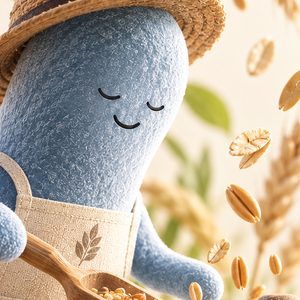
Bodyguard
Lactobacillus
Keeps order in his surroundings
Lactobacillus is a group of bacteria whose members may help maintain conditions that limit the growth of some other microorganisms.
It does not act like a lone bodyguard, though. Its significance depends on the species, the strain and the whole microbiome ecosystem.
Your gut is not a sterile space.
Thousands of different microorganisms live in your digestive tract. Some compete for nutrients and space, others produce substances that affect the conditions around them.
This constant interplay between microorganisms is one of the elements that create the balance of the gut ecosystem.
The Bodyguard is one participant in this system.
- Microorganisms
- Competition for space and nutrients
- Metabolites and environmental conditions
- The whole ecosystem
A simplified diagram. The real microbiome is thousands of species and millions of relationships.

Meet Lactobacillus
Lactobacillus is a group of bacteria known for taking part in fermentation and producing lactic acid.
Some members can affect the gut environment and limit the growth of some other bacteria through competition and the production of certain metabolites.
His superpower?
Helps maintain conditions in which some unwanted microorganisms find it harder to grow.
Lactobacillus does not automatically mean “good bacteria”. Different species and strains can behave differently. That is why at GutLoop we look at the microbiome as a whole ecosystem.
How does the Bodyguard work?
- 01 · Competes for space and available nutrients
- 02 · Affects the environment: lactic acid and other metabolites
- 03 · May limit the growth of some other microorganisms
- 04 · Co-creates the ecosystem — one of many elements of the microbiome
Some members of Lactobacillus produce lactic acid and other metabolites. Under certain conditions this can make it harder for some other microorganisms to grow — but the Bodyguard is one of many elements of the microbiome.
He doesn’t need one magic thing
Just as there is no single food that “fixes the microbiome”, there is no single food that guarantees Lactobacillus growth.
A varied diet
Varied foods provide the microbiome with different components and create a more complex environment for the whole bacterial community.
Plant foods
Vegetables, fruit, pulses, seeds and wholegrains provide a variety of components microorganisms use.
The right gut conditions
Lactobacillus does not function in isolation from the other inhabitants of the microbiome.
Balance instead of obsessing over one bacterium
The goal is not “as much Lactobacillus as possible”. The goal is to understand your whole ecosystem better.
When might the Bodyguard face harder conditions?
The composition of the microbiome can change under many influences. One cause cannot be identified from the presence or absence of Lactobacillus alone.
Antibiotics
Antibiotic treatment can significantly change the composition of the microbiome.
A monotonous diet
Limited food variety also means less varied substrates for microorganisms.
Big lifestyle changes
Diet, stress, sleep, physical activity and medicines can affect the microbiome’s environment.
Individuality
What happens to Lactobacillus in one person does not have to look the same in another.
What matters most is what happens between bacteria.
Microorganisms can compete, cooperate and use the metabolic products of other bacteria.
Lactobacillus ↔ Bifidobacterium ↔ Roseburia ↔ Akkermansia ↔ metabolites ↔ food. That is why the presence of one genus never tells the whole story.
That is exactly why we created GUT·DIET·MAP. Instead of looking at one dot, we can analyse a network of relationships.
GUT·DIET·MAP
These are exactly the relationships our knowledge map helps us chart: bacterium ↔ metabolite ↔ food.
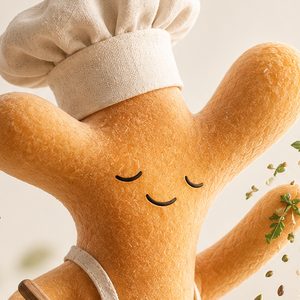
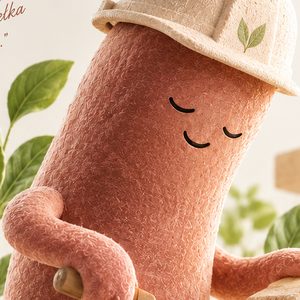

Where might the Bodyguard matter?
The areas in which science studies Lactobacillus — without promises and without “good bacteria”.
Digestion and the gut environment
Lactobacillus is linked to fermentation processes and the gut environment.
Immunity
The gut microbiome interacts closely with the immune system. Lactobacillus is one of the genera studied in this context.
Microbial balance
Some members of Lactobacillus can affect the environment and limit the growth of some other bacteria.
The microbiome after antibiotics
Antibiotics can change the microbiome, so Lactobacillus also appears in research on rebuilding the gut ecosystem.
Do you have your Bodyguard?
In the test we check the presence and relative abundance of specific taxa in your microbiome profile.
Your Lactobacillus result is one element of the whole profile, not a stand-alone health assessment. Lactobacillus is found in healthy people in very varied abundance.
Detected in lower relative abundance than the adopted reference range. A signal worth interpreting together with the rest of your profile and how you eat.
Within the adopted reference range. One element of your profile — it does not in itself mean everything is “perfect”, just as lower abundance does not mean disease.
Higher relative abundance in your profile. It does not automatically mean a benefit or a problem — we interpret it in the context of the whole ecosystem.
The bar only illustrates the three interpretation ranges, not your result. We define the reference range from population data and our research; it may be updated.
We don’t “fix” one bacterium. We work on the whole environment.
If your profile points to areas worth supporting, GutLoop can turn them into concrete diet and lifestyle actions.
It is not about growing one “good bacterium”. It is about understanding the whole team better.
Example type of recommendation — if your profile points to an area worth supporting
- 🥦 Increase the variety of foods
- 🌱 Provide varied fibre sources
- 🍽️ Watch how you respond to food
- 🔄 Make changes gradually
- 📊 Check how your profile changes
Illustrative example. GutLoop recommendations depend on the whole profile, questionnaire, goals and lifestyle, not on the level of one bacterium.
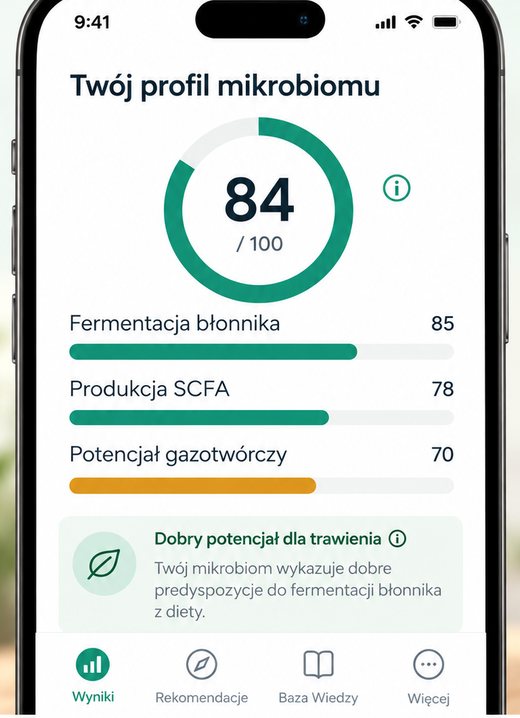
Your Bodyguard
| Presence | detected |
| Relative abundance | [level] |
| Context | [interpretation] |
This is what your Bodyguard looks like in GutLoop
After the test you will see the Bodyguard as part of your individual microbiome profile — with context and related areas.
- Your result · presence and relative abundance of Lactobacillus in your profile.
- Interpretation · what this element may mean in the context of your whole microbiome.
- Related areas · Gut environment · Fermentation · Microbiome balance
- Recommendations · always in the context of the whole profile.
This is not a separate “bacterium rating”. It is part of your individual microbiome profile.
The hero’s story · 0:45 · video coming soon
Meet the Bodyguard
“Hey. I’m the Bodyguard. My job is not to let in only the good and throw out the bad. In the microbiome it isn’t that simple. I watch over my corner of the world and help create conditions in which some other microorganisms find it harder to grow. But I have one important rule: I don’t work alone. So don’t just ask “do I have Lactobacillus?”. Ask: “what does my whole microbiome look like?”. See you in GutLoop.”
The film is a storytelling layer. It is a simplified way of talking about biology — the real microbiome is far more complex.
Want to go deeper?
Articles linked to the hero: science without shortcuts, in language you can understand.
Lactobacillus — who are the bacteria in this group?
Many species and strains, different properties — why “Lactobacillus” is not one bacterium.
Coming soon
The microbiome after antibiotics — what changes?
How antibiotics affect the microbiome and why recovery is individual.
Coming soon
Probiotic vs microbiome — what is the difference?
Do more probiotic bacteria always mean better?
Coming soon
The Bodyguard is only one member of your team.
Your microbiome is a complex ecosystem. GutLoop helps you see its elements, understand how they relate and find actions that fit your situation. Get to know your microbiome.